The Global Gold Renaissance: Macro Drivers Behind Cyclical Supply Demands
An in-depth market evaluation exploring central bank consolidation patterns, persistent macroeconomic headwinds, and industrial electronics expansion vectors driving unprecedented gold sector value horizons.
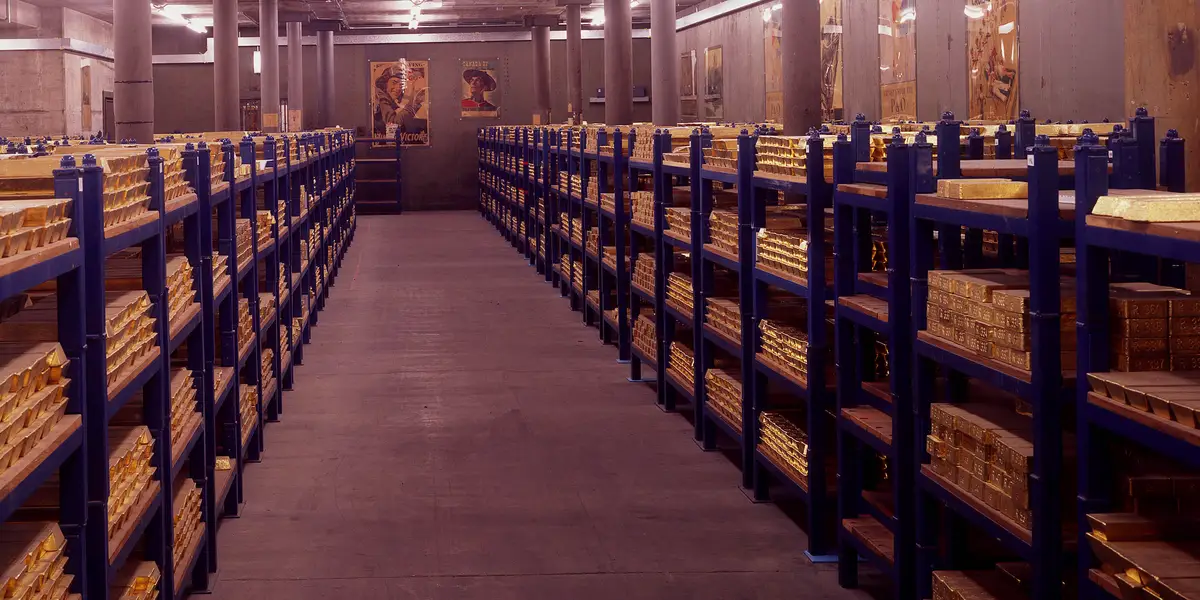
The international mining sector is undergoing an aggressive structural realignment as institutional capital shifts rapidly back toward precious metals. Driven by an interconnected matrix of financial market variables, global gold demand projections indicate a prolonged upward trajectory over the coming decade. Commercial extraction facilities are repositioning assets to scale production curves efficiently as the base spot price establishes historic structural baselines.
This macro industrial expansion is fueled heavily by global central banking entities continuously diversifying their sovereign reserve vaults away from paper currencies. As structural inflation vectors compress traditional credit and fixed-income returns, gold extraction infrastructure investments are serving as a high-liquidity hedge for enterprise capital protection.
Sovereign Reserve Accumulation and Net Inflows
According to compiled data registers from the World Gold Council, sovereign central bank net purchases have maintained an aggressive pace, removing thousands of metric tons from secondary fluid markets annually. This institutional accumulation represents a profound paradigm shift in market liquidity dynamics, creating a permanent structural supply floor underneath corporate exploration systems.
As developing economic blocs expand transactional infrastructure independent of traditional fiat currency tracking clearings, raw physical gold bars are establishing themselves as the universal anchor for international debt settlements. This cyclical demand forces asset exploration values upward, providing solid commercial tailwinds for companies controlling verified alluvial reserves.


Advanced Technological and Industrial Consumption
Beyond its classical safe-haven investment profile, physical gold is experiencing massive consumption growth across advanced high-technology sectors. Analytical industry modeling from McKinsey & Company highlights a surging industrial usage curve directly tied to the global expansion of artificial intelligence server grids, high-frequency telecommunications hardware, and automotive electrification micro-circuit arrays.
Gold’s absolute chemical resistance to oxidation combined with unmatched electrical conductivity metrics makes it irreplaceable across aerospace logic systems and high-density semiconductor infrastructure. This structural industrial demand matrix guarantees that a significant percentage of annual mining throughput is absorbed directly by global manufacturing entities, insulating extraction operations from short-term financial market fluctuations.
"The convergence of institutional central bank reserve shifts and the accelerating demand for high-grade electronic components has created a historic cyclical supply constraint, positioning highly responsive mining operations for significant structural expansion."
Strategic Outlook for Production Logistics
For commercial enterprises holding zero-debt capital structures and deploying highly efficient mechanical processing circuits, this macro environment offers an unparalleled development launchpad. Operations utilizing modern alluvial dredging extraction bypass the heavy capital expenditures and decade-long exploration delays tied to conventional underground hard-rock tunneling projects.
As macro metrics continue to point toward shrinking physical gold deposits globally, firms that manage active, environmentally compliant production assets are positioned to deliver exceptional asset yield metrics. The global gold industry is not merely expanding; it is entering a highly technical structural renaissance where operational speed and strict environmental governance serve as the core drivers for corporate success.
Sources & References
-
1.
World Gold Council (WGC). Gold Hub Platform Registry: "Gold Demand Trends Dashboard" data segment tracking total global investment and technological asset consumption metrics. www.gold.org →
-
2.
McKinsey & Company. Our Insights Global Editorial Registry: "Metals and Mining Strategic Outlook Profiles", identifying macroeconomic changes across primary industry resource sectors. ://mckinsey.com →
-
3.
United States Geological Survey (USGS). National Minerals Information Center Data Logs: "Mineral Commodity Summaries — Gold Statistics Ledger", detailing precise supply indices and industrial processing curves. www.usgs.gov →
-
4.
International Monetary Fund (IMF). Financial Data Warehouse: "Primary Commodity Price Tracking Matrix", mapping historic valuations and macro inflationary hedges. www.imf.org →